Guides for parents
Kids' teeth: practical guides for parents
Clear answers to the questions parents ask most about children's teeth, from getting a toddler to brush to when baby teeth fall out. Every guide is based on public health guidance and lists its sources.
By the Molar Squad team at Socket Science, a small studio run by a dentist


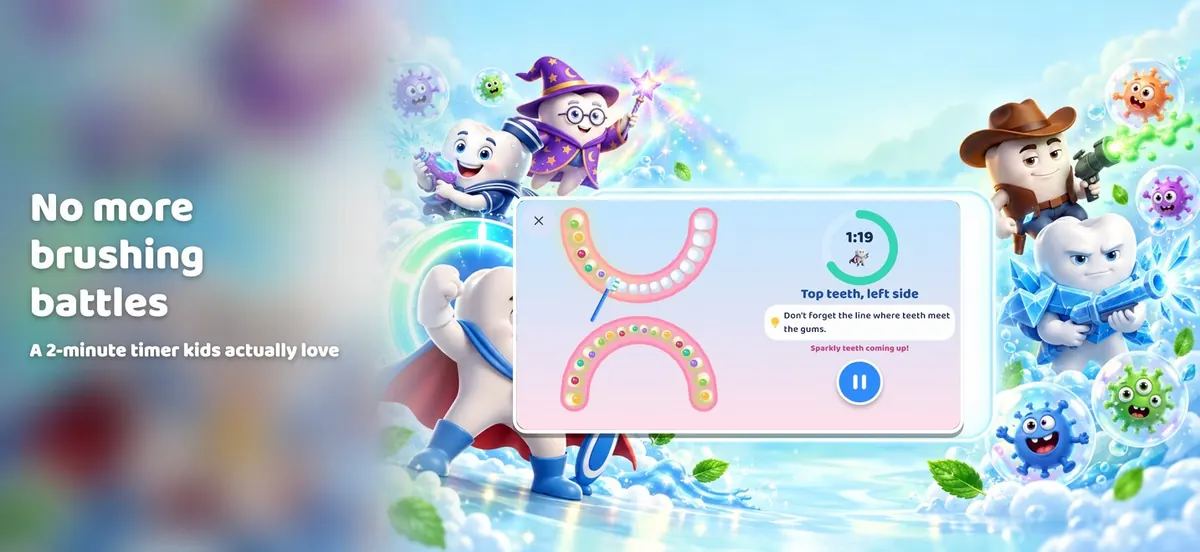
Brushing battlesToddler won't brush teeth? Why it happens and 12 tips that helpIf your toddler won't brush their teeth, you are far from alone, and it is usually a phase rather than a problem. Most children resist because they want control, feel rushed or simply find it boring. A calm, predictable routine, a few games and letting them help (while you still finish the job) usually turn things around.Read the guide → · 6 min read
Brushing basicsHow long should kids brush their teeth?Kids should brush their teeth for about 2 minutes, twice a day, with fluoride toothpaste. One of those brushes should be last thing at night before bed. A timer, a song or a brushing app makes the 2 minutes easy to measure and much easier to sit through.Read the guide → · 6 min read
Brushing basicsHow to Brush a Toddler's Teeth (and How Technique Changes with Age)To brush a toddler's teeth, lay or sit your child so you can see into their mouth, use a soft child-sized brush with a smear of fluoride toothpaste, and clean every tooth surface and the gumline with small, gentle circles for about two minutes. Do this twice a day, including last thing at night. You will brush for them at first, then gradually hand over while still supervising until around age 7 or 8.Read the guide → · 6 min read
Toothpaste & fluorideHow Much Toothpaste for Kids? A Simple Guide by AgeFor children under 3, use a smear of fluoride toothpaste about the size of a grain of rice. From 3 to 6, use a pea-sized amount. US and UK advice agree on these amounts, and the NHS also gives the fluoride strength to look for on the box, which differs by age.Read the guide → · 5 min read
Baby teethBaby teeth chart: when teeth come in and when they fall outMost babies get their first tooth at around 6 months, usually one of the lower front teeth, and most children have all 20 baby teeth by about age 2 to 3. Baby teeth then start to fall out at around age 6, beginning with the front teeth, and the last ones usually go between about 10 and 12. Every child is different, so treat the ages below as a rough guide rather than a deadline.Read the guide → · 5 min read
Dentist visitsYour child's first dentist visit: when to go and what to expectIn the US, the American Dental Association and the American Academy of Pediatric Dentistry recommend a first dentist visit after the first tooth appears and no later than the first birthday. In the UK, the NHS says to go when the first milk teeth appear, or before 12 months at the latest. The first visit is usually short and gentle, and it helps your child get used to the dentist early.Read the guide → · 5 min read
Tooth decayCavities in kids: what causes them and how to help prevent themCavities in kids happen when germs in plaque turn sugars from food and drink into acid that slowly dissolves tooth enamel. The earliest sign is often a chalky white spot, and at that stage decay can sometimes be stopped. Brushing twice a day with fluoride toothpaste, keeping sugary foods and drinks to mealtimes, and regular dental check-ups are the foundations of prevention.Read the guide → · 6 min read
Food and drinkSugar and kids' teeth: how it causes decay and simple swaps that helpSugar harms kids' teeth because germs in plaque turn it into acid, and that acid dissolves tooth enamel. How often your child has sugar matters as much as how much, because every sugary snack or sip starts a new acid attack. Keeping sweet foods and drinks to mealtimes and offering water or plain milk in between is one of the most helpful changes you can make.Read the guide → · 6 min read
Brushing habitsTooth Brushing Chart for Kids: How to Make One That WorksA tooth brushing chart for kids is a simple weekly grid with a box for morning and evening brushing each day, which your child fills with a sticker or tick straight after brushing. It works best when it tracks just this one habit, sits where your child can see it, and pairs each sticker with specific praise rather than sweets.Read the guide → · 5 min read
Bedtime routineA Calm Bedtime Tooth Brushing Routine for KidsA good bedtime tooth brushing routine means brushing your child's teeth last thing at night with fluoride toothpaste, spitting rather than rinsing, and then offering nothing but water before sleep. Placing brushing at the same point in a calm, predictable routine, before stories and lights out, makes it far easier for tired children to accept.Read the guide → · 5 min read
This guide is general information, not medical advice. If you are worried about your child's teeth, talk to your dentist or doctor.