
Orofacial Pain & TMD Practice Questions
Orofacial pain and temporomandibular disorders are a common source of diagnostic confusion, which makes them attractive to exam writers. This set covers TMD classification, clinical examination, disc displacement disorders, myofascial pain and muscle disorders, the differential diagnosis of orofacial pain, overlap with headache, imaging correlation, and management approaches. On the AFK, INBDE, ORE and ADC, expect questions that describe joint sounds, mouth opening and pain patterns and ask for the most likely diagnosis, or that test whether conservative management should come before irreversible treatment.
10 questions · answers and explanations revealed as you go · no sign-up
Questions
Question 1 of 10
TMD Classification
Why is imaging alone insufficient to classify most TMD pain conditions?
The answer is B.
Symptoms, examination, and imaging can be discordant. Classification uses reproducible history and examination rather than pain location alone. Physical diagnosis and psychosocial assessment are complementary: one characterizes the disorder, while the other identifies disability, distress, behavior, and prognostic factors.
Question 2 of 10
Disc Displacement Disorders
Which change may be seen in TMJ degenerative joint disease?
The answer is C.
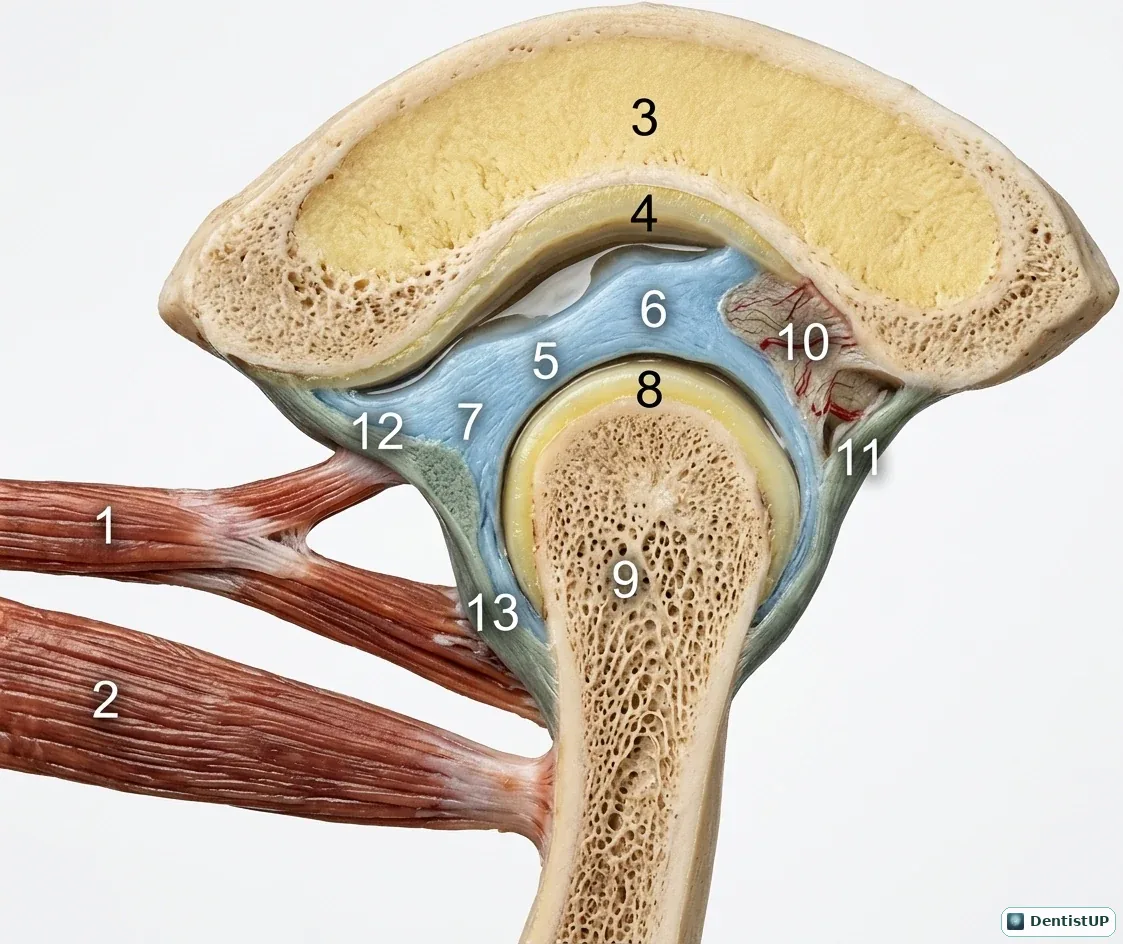
Degeneration produces a spectrum of destructive and reparative osseous features. Disc and degenerative disorders use symptom history, movement, reproducible sounds, familiar joint pain, and imaging when it changes care. Clicking is not synonymous with pain, loss of a click may reflect loss of reduction, and osseous degeneration may be symptomatic or incidental.
Question 3 of 10
Myofascial Pain & Muscle Disorders
Which measure commonly supports initial management of uncomplicated muscle pain?
The answer is A.
Conservative active care is generally appropriate first. Diagnosis requires familiar pain from a target muscle; referral is documented when pain extends beyond its boundary. Bruxism is a behavior and risk factor, not a universal TMD cause. Splints may protect teeth and modulate load but require monitoring and do not guarantee resolution.
Question 4 of 10
Management Approaches
Why are reversible treatments usually preferred initially for common TMD?
The answer is D.
The uncertain multifactorial course favors low-risk adaptable care first. Care begins with reversible measures matched to diagnosis and monitored by pain and function. Education, exercise, therapy, splints, and medicines have distinct roles. Escalation is reserved for red flags, progression, or persistent major impairment.
Question 5 of 10
Imaging Correlation
Why are both closed- and open-mouth MRI images often obtained?
The answer is B.
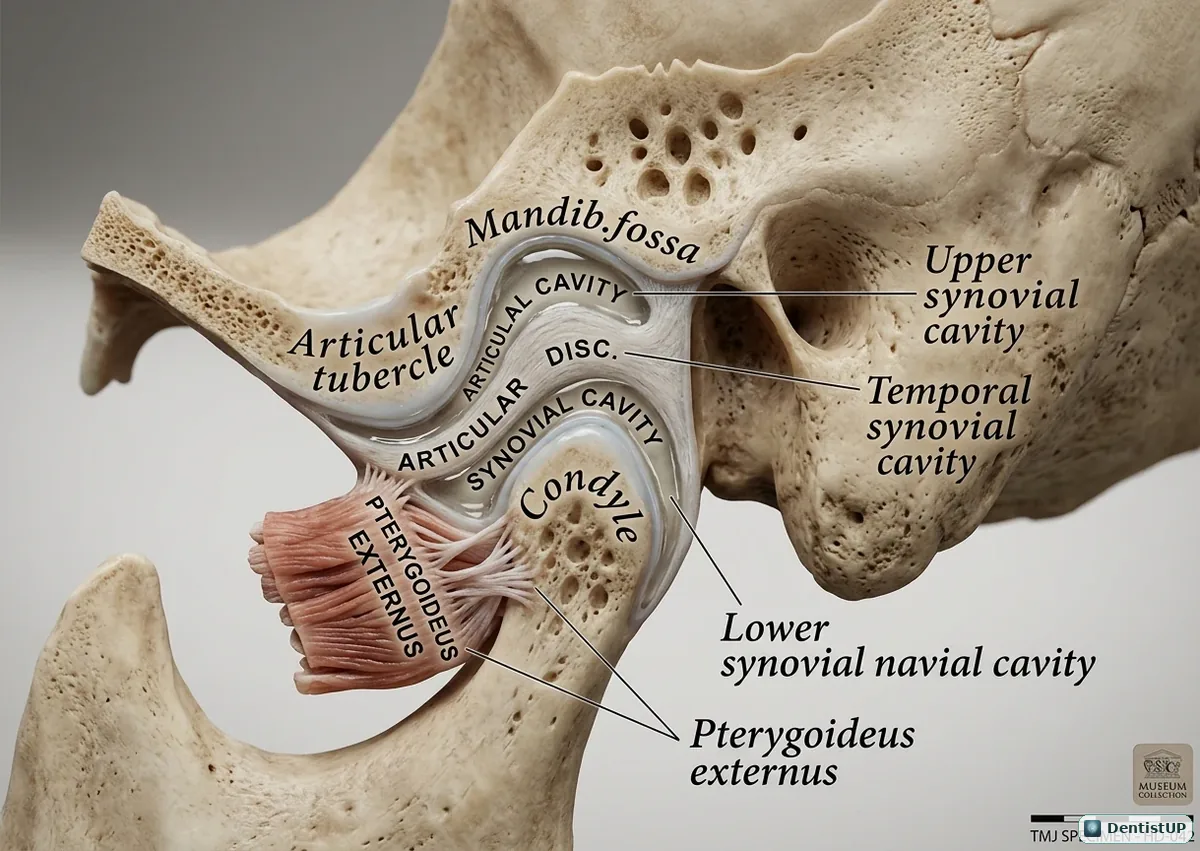
The paired positions help determine whether a displaced disc reduces during opening. Imaging answers a question after history and examination. MRI primarily depicts disc, effusion, and soft tissues; CT-based imaging depicts mineralized surfaces. Findings require symptom correlation because structural changes may be incidental or unrelated to the pain source.
Question 6 of 10
Headache-TMD Overlap
Can migraine and painful TMD occur in the same patient?
The answer is C.
Coexistence is common enough that both phenotypes should be evaluated. Headache and TMD may coexist, but neither is inferred from location alone. Relation to jaw function, reproduction of familiar pain from muscles or joints, headache phenotype, neurologic and systemic features, and change over time guide differentiation and referral.
Question 7 of 10
Orofacial Pain Differential Diagnosis
Which finding favors odontogenic pain over a masticatory muscle disorder?
The answer is C.
Concordant pain from a specific tooth during sensibility, percussion, palpation, or cusp-loading tests supports a dental source. Muscle pain is instead reproduced from the involved muscle and may refer to teeth. The complete dental and TMD examinations prevent irreversible treatment based only on where pain is perceived.
Question 8 of 10
Clinical Examination
What should be added to interincisal opening when calculating total mandibular opening?
The answer is B.
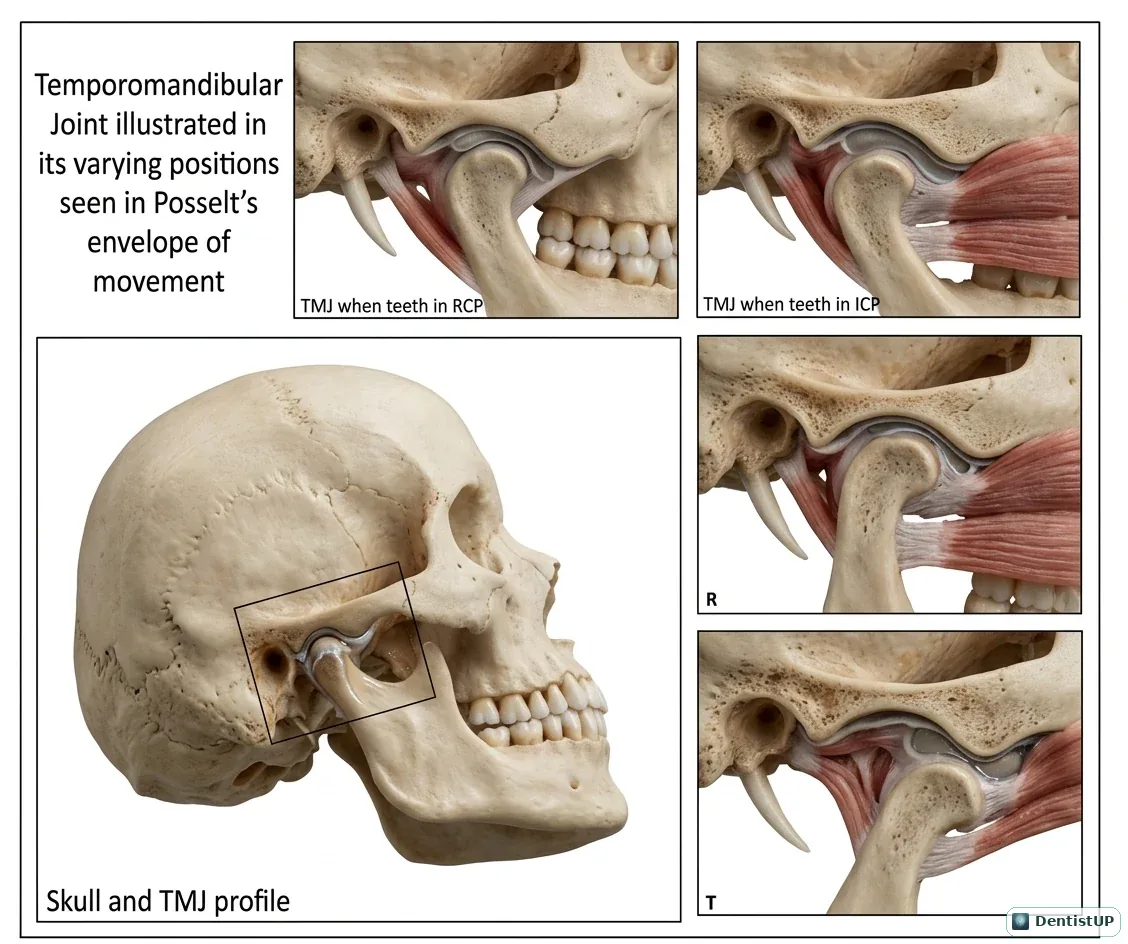
Including vertical overlap more accurately represents total excursion. Examination documents familiar pain, site, movement, range, deviation, sounds, and tissue provocation with standardized technique. Findings are interpreted with history and bilateral comparison; isolated tenderness, noise, or one measurement is not a complete diagnosis.
Question 9 of 10
Imaging Correlation
What important structure is not reliably assessed directly on routine CBCT?
The answer is C.
CBCT has limited soft-tissue contrast for disc assessment. Imaging answers a question after history and examination. MRI primarily depicts disc, effusion, and soft tissues; CT-based imaging depicts mineralized surfaces. Findings require symptom correlation because structural changes may be incidental or unrelated to the pain source.
Question 10 of 10
Clinical Examination
What movement is measured when the mandible shifts from midline to one side?
The answer is C.
Lateral excursion quantifies side-to-side mandibular mobility. Examination documents familiar pain, site, movement, range, deviation, sounds, and tissue provocation with standardized technique. Findings are interpreted with history and bilateral comparison; isolated tenderness, noise, or one measurement is not a complete diagnosis.
Choose an answer to reveal the explanation.
Related anatomy diagrams
More branches
Full mock exams
DentistUP is an independent educational platform. Socket Science is not affiliated with, endorsed by, sponsored by, or approved by NDEB, INBDE, JCNDE, ADA, GDC, ORE, ADC, or any other examination authority. DentistUP does not contain official or recalled examination questions and does not guarantee examination outcomes. Educational content, not patient-specific clinical advice.