
Physiology Practice Questions
Physiology explains how the orofacial system works, which makes it the basis for understanding pain, saliva, chewing and swallowing in the clinic. This set covers general physiology relevant to dental practice, bone physiology, mastication and neuromuscular control, deglutition, pain physiology, periodontal ligament proprioception, salivary physiology, taste and TMJ biomechanics. Dental students meet these topics in preclinical courses; dentists preparing for the INBDE, AFK and ORE meet them as mechanism questions that sit behind clinical findings such as xerostomia, altered taste or pain referred from another site.
10 questions · answers and explanations revealed as you go · no sign-up
Questions
Question 1 of 10
Periodontal Ligament Proprioception
Periodontal mechanoreceptors encode the direction and magnitude of force applied to a tooth. Which physiologic process or structure is being described?
The answer is A.
PDL force-direction sensing response is correct. PDL afferents respond to strain created as the tooth displaces in its socket, providing spatial information about occlusal loading. This defines the named response at its most direct physiologic level.
Question 2 of 10
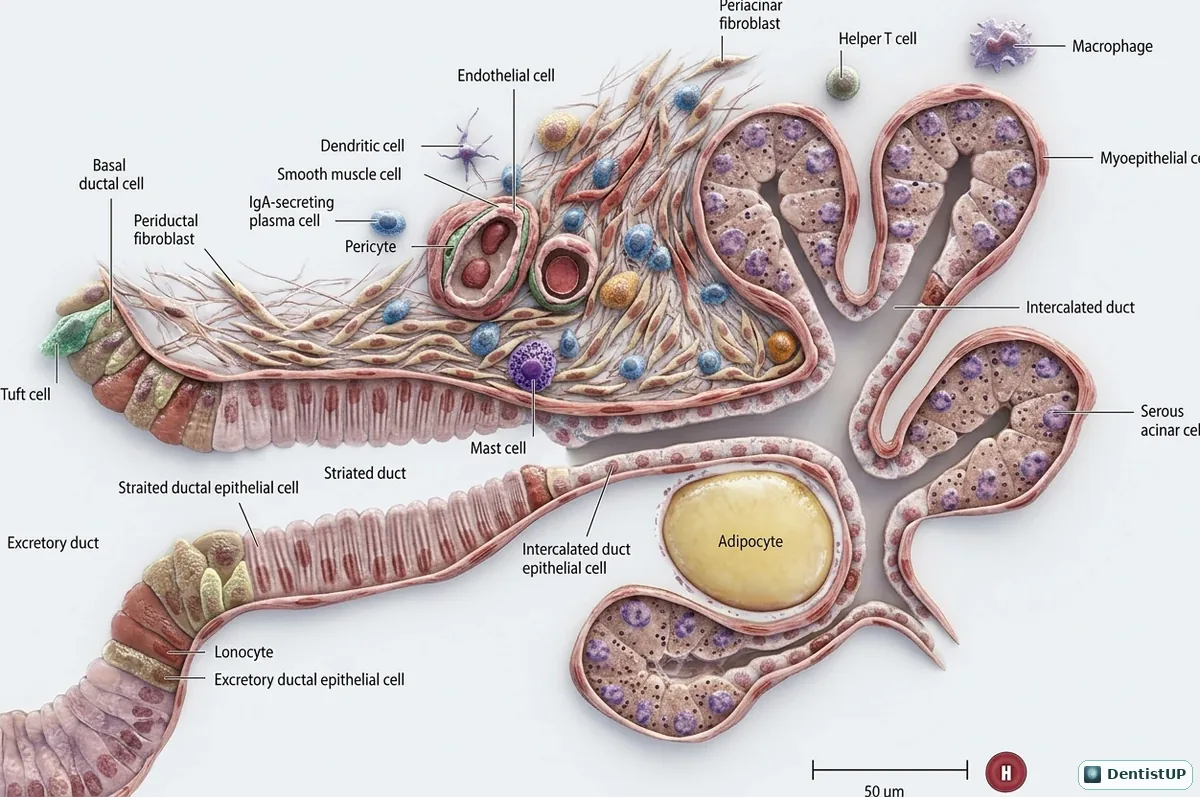
Salivary Physiology
Bicarbonate concentration increases as salivary stimulation and flow increase. Which physiologic process or structure is being described?
The answer is A.
flow-dependent bicarbonate rise response is correct. Stimulated ducts secrete more bicarbonate, strengthening acid neutralization when oral clearance demands are greatest. This defines the named response at its most direct physiologic level. This causal sequence explains the finding while excluding adjacent control steps.
Question 3 of 10
Pain Physiology
Sustained input increases excitability and synaptic gain in central nociceptive neurons. Which physiologic process or structure is being described?
The answer is D.
central sensitization response is correct. Repeated nociceptive input can strengthen central synapses, reduce inhibition, and recruit normally subthreshold inputs into pain pathways. This defines the named response at its most direct physiologic level.
Question 4 of 10
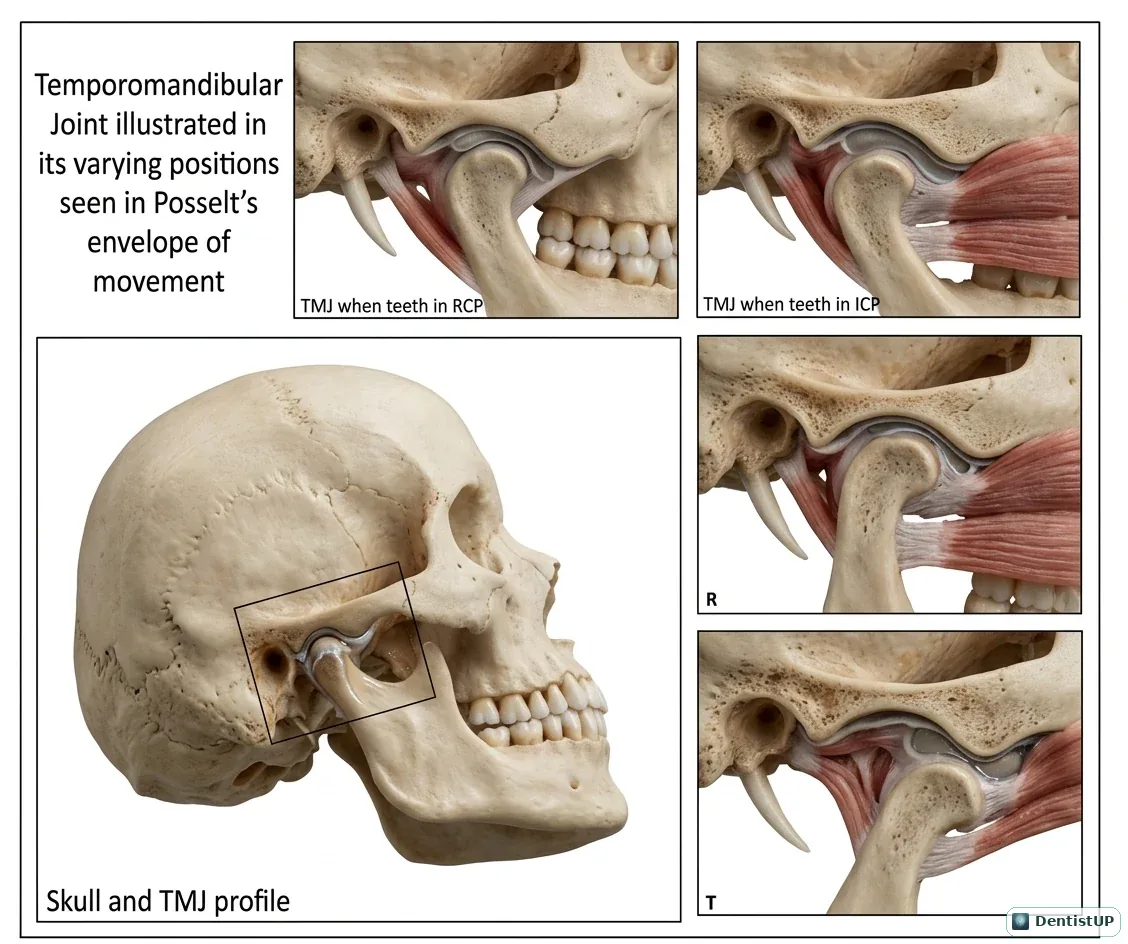
TMJ Biomechanics
Protrusion moves both condyle-disc complexes anteriorly and inferiorly along their eminences. Which physiologic process or structure is being described?
The answer is B.
protrusive bilateral translation response is correct. Symmetric bilateral translation produces protrusion; unilateral restriction creates asymmetric travel and deviation. This defines the named response at its most direct physiologic level. This causal sequence explains the finding while excluding adjacent control steps.
Question 5 of 10
Mastication & Neuromuscular Control
A brief downward tap on the chin stretches jaw elevators and produces a small closing movement. Which physiologic process or structure is being described?
The answer is C.
Jaw-jerk stretch reflex pathway is correct. The jaw jerk is a stretch reflex: rapid elevator lengthening activates spindle afferents and trigeminal motor neurons. Mastication depends on centrally organized rhythm that is continuously refined by trigeminal sensory feedback to protect teeth and coordinate efficient bolus processing.
Question 6 of 10
Bone Physiology
Osteoblasts synthesize osteoid and regulate its subsequent mineralization. Which physiologic process or structure is being described?
The answer is B.
osteoblastic formation phase response is correct. Osteoblasts produce collagen-rich osteoid, control matrix maturation, and promote mineral deposition before becoming lining cells or osteocytes. This defines the named response at its most direct physiologic level.
Question 7 of 10
General Physiology Relevant to Dental Practice
Carotid sinus and aortic arch stretch receptors buffer rapid changes in arterial pressure. Which physiologic process or structure is being described?
The answer is A.
arterial baroreceptor reflex response is correct. Reduced stretch decreases glossopharyngeal and vagal afferent firing to the medulla, increasing sympathetic and reducing parasympathetic output. This defines the named response at its most direct physiologic level.
Question 8 of 10
Taste Physiology
Low-concentration salt taste begins with sodium entering taste cells through apical ion channels. Which physiologic process or structure is being described?
The answer is D.
salty epithelial sodium entry response is correct. Salty transduction can use direct sodium entry, which depolarizes the receptor cell more rapidly than a metabotropic GPCR cascade. This defines the named response at its most direct physiologic level.
Question 9 of 10
Deglutition (Swallowing)
Intrinsic and extrinsic tongue muscles shape the bolus and drive it posteriorly during oral transfer. Which physiologic process or structure is being described?
The answer is A.
Hypoglossal tongue propulsion is correct. The hypoglossal nerve supplies most tongue muscles required for bolus shaping and posterior propulsion. Safe swallowing requires precise temporal coupling of bolus propulsion, transient respiratory pause, and airway closure across oral, pharyngeal, and esophageal phases.
Question 10 of 10
Bone Physiology
A brief interval links completion of osteoclastic excavation to recruitment of bone-forming cells. Which physiologic process or structure is being described?
The answer is C.
remodeling reversal phase response is correct. The reversal phase cleans and conditions the resorption surface while coupling signals recruit and differentiate osteoblast-lineage cells. This defines the named response at its most direct physiologic level.
Choose an answer to reveal the explanation.
Related anatomy diagrams
More branches
Full mock exams
DentistUP is an independent educational platform. Socket Science is not affiliated with, endorsed by, sponsored by, or approved by NDEB, INBDE, JCNDE, ADA, GDC, ORE, ADC, or any other examination authority. DentistUP does not contain official or recalled examination questions and does not guarantee examination outcomes. Educational content, not patient-specific clinical advice.