
Oral Medicine Practice Questions
Oral medicine questions describe a patient and ask you to reason towards a diagnosis or the next step. This set covers diagnostic methodology, vesiculoerosive and ulcerative disease, xerostomia and salivary dysfunction, burning mouth syndrome and sensory disorders, facial pain and neurosensory disorders, taste and smell disorders, halitosis, orofacial infections, and the oral manifestations of systemic disease and their management. It is a high-yield branch on the AFK, INBDE, ORE and ADC, and it overlaps with oral pathology and pharmacology, so questions often combine a mucosal finding with a medical history.
10 questions · answers and explanations revealed as you go · no sign-up
Questions
Question 1 of 10
Facial Pain & Neurosensory Disorders
Why should repeated dental treatment be avoided in persistent idiopathic tooth-area pain?
The answer is C.
When thorough clinical and imaging assessment shows no dental disease that explains persistent pain, repeated endodontic treatment, retreatment, extraction, or surgery can add tissue injury and reinforce pain without benefit. Clear explanation, longitudinal review, specialist diagnosis, and appropriate neuropathic or behavioral pain management are safer than procedural escalation.
Question 2 of 10
Xerostomia & Salivary Gland Dysfunction
Which preventive agent is central for a dentate patient with chronic severe dry mouth?
The answer is A.
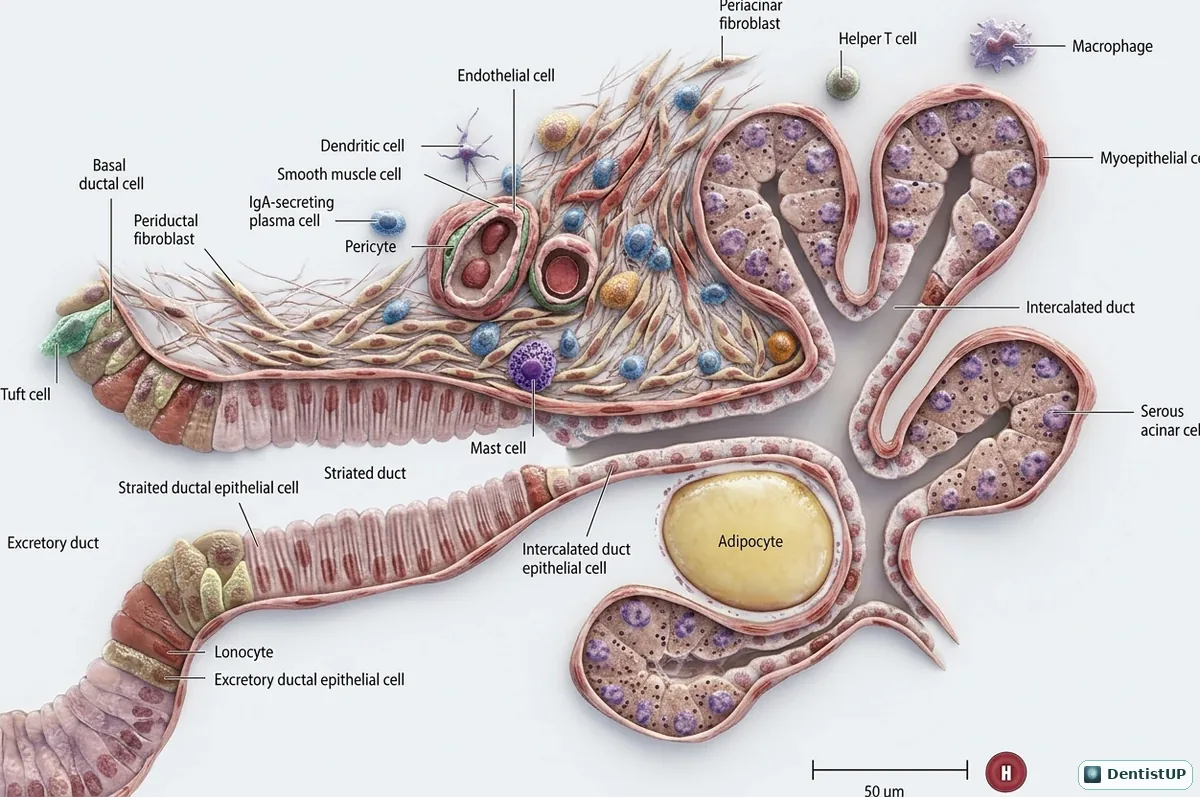
Topical fluoride is central because chronic hyposalivation markedly raises caries risk. High-fluoride toothpaste or other professional and home fluoride regimens may be indicated according to individual risk. Frequent fermentable sugar, alcohol-containing products, and abrasive habits can worsen disease or discomfort and are not substitutes for prevention.
Question 3 of 10
Halitosis
What does a portable sulfide monitor primarily estimate?
The answer is D.
Portable sulfide monitors estimate selected volatile sulfur compounds in breath. They provide an instrumental measure but do not detect all odorants equally and can be influenced by sampling and device characteristics. Results should be interpreted alongside organoleptic assessment, history, and oral examination rather than treated as a complete diagnosis.
Question 4 of 10
Medically Complex Patient Assessment
What defines ASA physical status III?
The answer is A.
ASA III denotes severe systemic disease, often with substantive functional limitation, but not necessarily a constant threat to life. Classification reflects the patient's current overall condition rather than a single diagnosis. It supports communication and risk planning but must be integrated with procedure invasiveness, urgency, monitoring needs, and available expertise.
Question 5 of 10
Diagnostic Methodology
What does toluidine blue preferentially bind in suspicious oral tissue?
The answer is A.
Toluidine blue is a metachromatic dye with affinity for nucleic acids and may be retained in dysplastic or malignant tissue with increased nuclear material. It is an adjunct for selecting or mapping suspicious areas, not a stand-alone cancer test. Inflammation, trauma, and ulceration can retain dye and create false-positive findings.
Question 6 of 10
Orofacial Infections: Medical Management Scope
Which finding is characteristic of primary herpetic gingivostomatitis?
The answer is C.
Primary oral HSV infection can produce fever, malaise, lymphadenopathy, diffuse painful marginal gingivitis, and vesicles that rapidly ulcerate across keratinized and nonkeratinized mucosa. This widespread pattern differs from recurrent herpes labialis and recurrent aphthae. Hydration status is central because pain may prevent drinking.
Question 7 of 10
Taste & Smell Disorders
Which dental factor can contribute to an unpleasant taste?
The answer is D.
Plaque, tongue coating, periodontal suppuration, caries, food stagnation, candidiasis, and other oral disease can generate unpleasant tastes or odors. Oral examination and hygiene assessment are therefore part of taste evaluation. Finding and treating a local source may resolve secondary dysgeusia, but no oral disease should be assumed without evidence.
Question 8 of 10
Oral Manifestations of Systemic Disease: Management Scope
What information is most important before prescribing a new medicine to a patient taking antiretroviral therapy?
The answer is D.
Antiretroviral regimens differ substantially in metabolic interactions, renal or hepatic effects, and overlapping toxicity. The clinician should obtain a complete current medication list and check an authoritative interaction resource or coordinate with the prescriber. Restorative shade, toothbrush brand, and childhood dentition do not determine medication safety.
Question 9 of 10
Vesiculoerosive & Ulcerative Disease
Which symptom in suspected mucous membrane pemphigoid requires prompt specialist assessment?
The answer is D.
Mucous membrane pemphigoid can scar conjunctival tissue and threaten vision, so ocular redness, pain, irritation, photophobia, or visual change warrants prompt ophthalmic assessment. Disease can also affect airway, esophageal, and genital mucosa. Benign frictional changes, brief dentinal sensitivity, and ordinary tongue coating do not carry this scarring risk.
Question 10 of 10
Burning Mouth Syndrome & Orofacial Sensory Disorders
What is commonly found on oral examination in primary burning mouth syndrome?
The answer is C.
Patients with primary BMS often describe intense burning despite no visible mucosal disease that explains it. The tongue, lips, palate, or broader mouth may be involved, often with altered taste or subjective dryness. A normal examination does not invalidate pain, but it makes careful history and targeted exclusion of secondary causes essential.
Choose an answer to reveal the explanation.
Related anatomy diagrams
More branches
Full mock exams
DentistUP is an independent educational platform. Socket Science is not affiliated with, endorsed by, sponsored by, or approved by NDEB, INBDE, JCNDE, ADA, GDC, ORE, ADC, or any other examination authority. DentistUP does not contain official or recalled examination questions and does not guarantee examination outcomes. Educational content, not patient-specific clinical advice.